
STANDARDS & CERTIFICATION
ISI marking and IS 3564: what certification on a door closer means
ISI, BIS, IS 3564, ISO 9001 and cycle testing get used almost interchangeably in product listings. They certify quite different things.
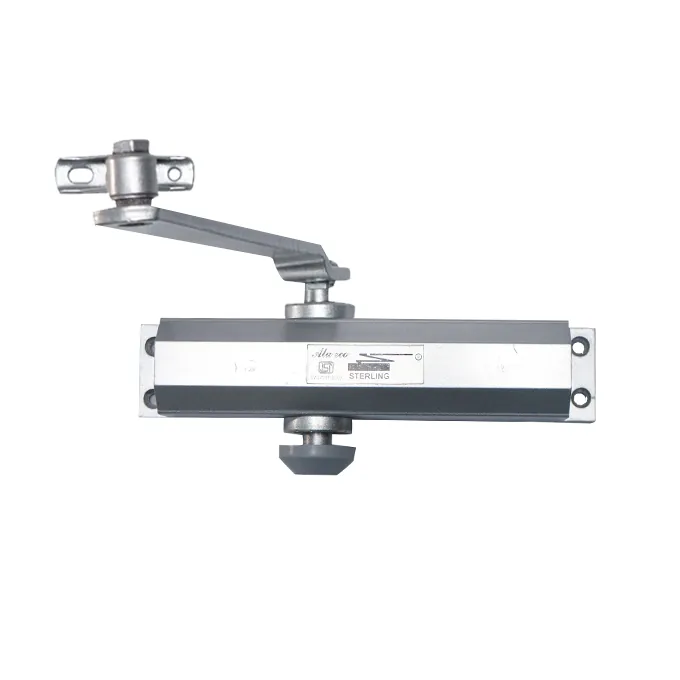
Hardware listings tend to stack up certification marks without explaining them, and several of the common ones certify completely different things. If you are specifying door closers for a project, particularly a government or institutional one where compliance gets checked, it is worth knowing which claim is which.
BIS and the ISI mark
The Bureau of Indian Standards is India's national standards body. It publishes Indian Standards, written as IS followed by a number, and it runs a product certification scheme. A manufacturer licensed under that scheme may apply the ISI mark to a product, and the mark means a specific thing: this product conforms to the Indian Standard named alongside it, and the factory is operating under a BIS licence with the testing and surveillance that licence requires.
The ISI mark is therefore a product claim backed by a third party, not a self-declaration. Each licence carries a CM/L number identifying it, which is the detail worth asking for, because a mark without a traceable licence number behind it is not verifiable. Sterling's door closers are covered by BIS licence CM/L No. 7700126309, and the floor springs by CM/L No. 7700249814.
What IS 3564 covers
IS 3564 is the Indian Standard for hydraulically regulated door closers. It is the standard Sterling's door closers are ISI marked against, in the 1995 revision. You will see it written on product documentation as "ISI marked as per IS 3564:1995". The standard sets out what a door closer of a given size has to do and how it is verified, which is what makes a conformity claim meaningful rather than decorative.
EN 1154 and power sizes
Alongside the Indian Standard, the European standard EN 1154 for controlled door closing devices is what gives the industry the EN 1 to EN 7 power size scale. That scale is near-universal in product literature regardless of where a closer is sold, because it is a genuinely useful shorthand: each size ties to a maximum door leaf width and mass, so a specifier can size a closer against a door without reading a full datasheet. Sterling's models are quoted in those terms: EN 1-2 through EN 4-5 across the surface-mounted range.
Cycle testing
A durability figure describes how long a closer keeps working, and the usual benchmark is 500,000 opening and closing cycles, or five lakh, which is also the durability test requirement in EN 1154. Sterling's door closers and floor springs are tested to that figure.
It is worth putting the number in context. Five lakh cycles on a busy retail entrance cycling a few hundred times a day is a working life measured in years; on an internal office door it is effectively the life of the building. The figure matters most where traffic is heavy, and it is a reasonable proxy for build quality everywhere else.
ISO 9001:2015 is not a product certification
This is the distinction most often blurred. ISO 9001:2015 certifies a quality management system: that the organisation has documented processes, controls them, and audits itself against them. It says nothing directly about whether any individual product meets a performance standard.
Both claims are worth having and they answer different questions. ISO 9001 tells you the factory works to a controlled process; the ISI mark against IS 3564 tells you the product itself has been certified to a standard. MM Efficient Gadget LLP manufactures in an ISO 9001:2015 certified facility, and the products carry ISI marking under the BIS licences above, but those are two separate statements, and a supplier offering only the first is not offering the second.
What to ask a supplier
Three questions separate a documented claim from a decorative one. Which Indian Standard is the product marked against, and under what CM/L licence number? What EN power size does the model cover, and at what door width and mass? And what cycle figure is the durability claim based on? A manufacturer that certifies its products can answer all three from documentation.