How to verify a BIS licence (CM/L) number before you buy
Covers 2 BIS licences
How to check a CM/L number against BIS records, the five things to compare, and which Sterling models each of its two licences covers.
- Written by
- Sterling
- Published
- Updated
An ISI mark is a printed graphic, and anyone with a label printer can reproduce it. What cannot be reproduced is the licence record behind it at the Bureau of Indian Standards, and the link between the two is the CM/L number printed with the mark. Checking it takes a few minutes. This guide covers what the number is, where to check it, what to compare, and the two licence numbers Sterling holds.
If you want the background first, the guide to ISI marking and IS 3564 explains what BIS, the ISI mark and IS 3564 each mean.
What a CM/L number is
Under the BIS product certification scheme, a manufacturer applies for a licence to use the Standard Mark, the ISI mark, on a product that conforms to a named Indian Standard. BIS tests samples, inspects the factory and, if both pass, grants the licence. Each licence carries a number prefixed CM/L, and that number appears with the mark on the product.
Four things about a licence matter when you verify one:
- It is granted to a manufacturer at a specific premises, not to a brand, a dealer or an importer.
- It is issued against one Indian Standard.
- It has a scope: the varieties, sizes or grades the licence covers. A manufacturer can hold a licence and still make models that fall outside it.
- It has a validity period and a status: licences are renewed, and they can lapse, be suspended or be cancelled.
A CM/L number is therefore a record, not a badge: this factory may mark these products, to this standard, until this date. Each part can be checked.
What the mark on the product should show
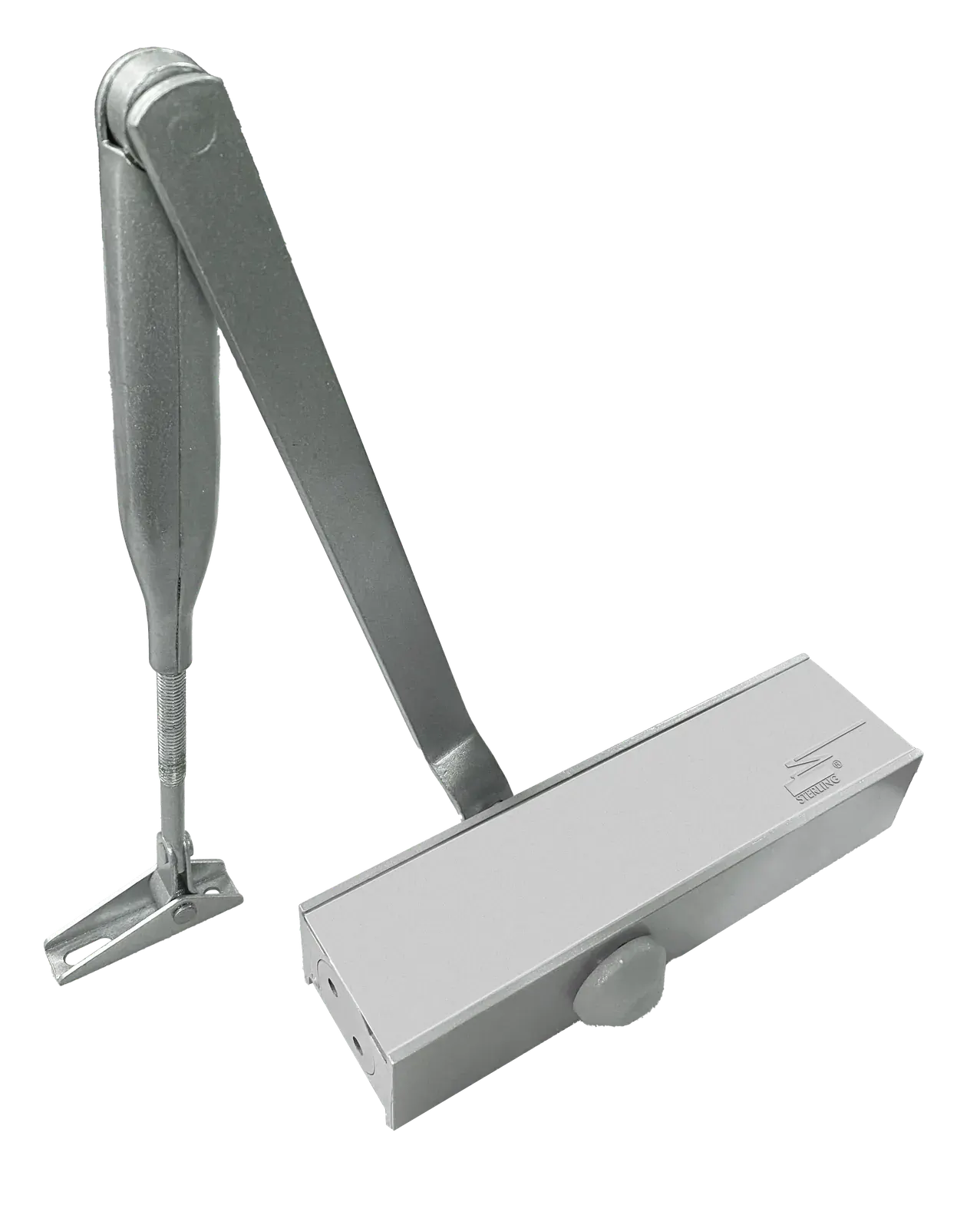
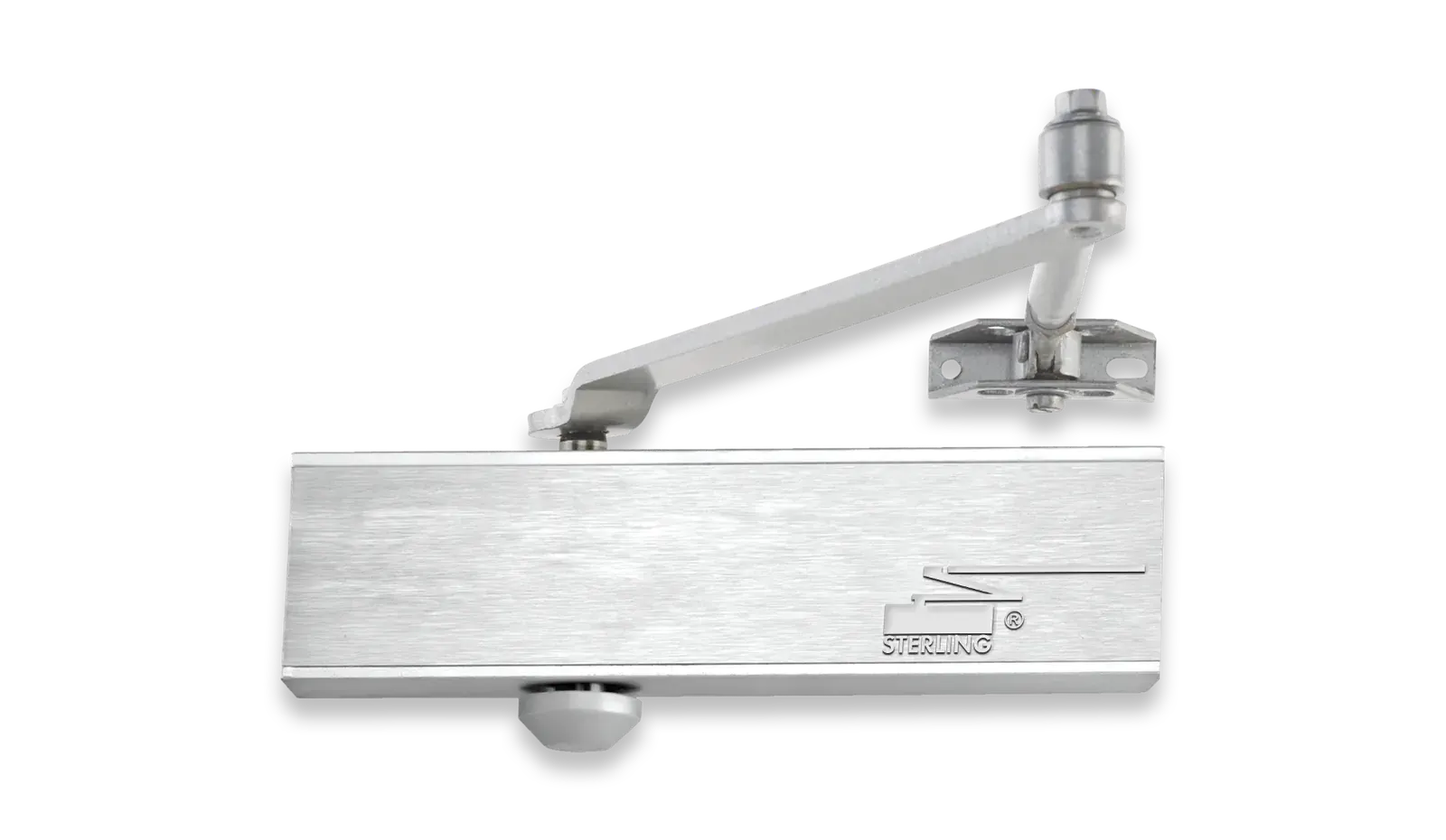
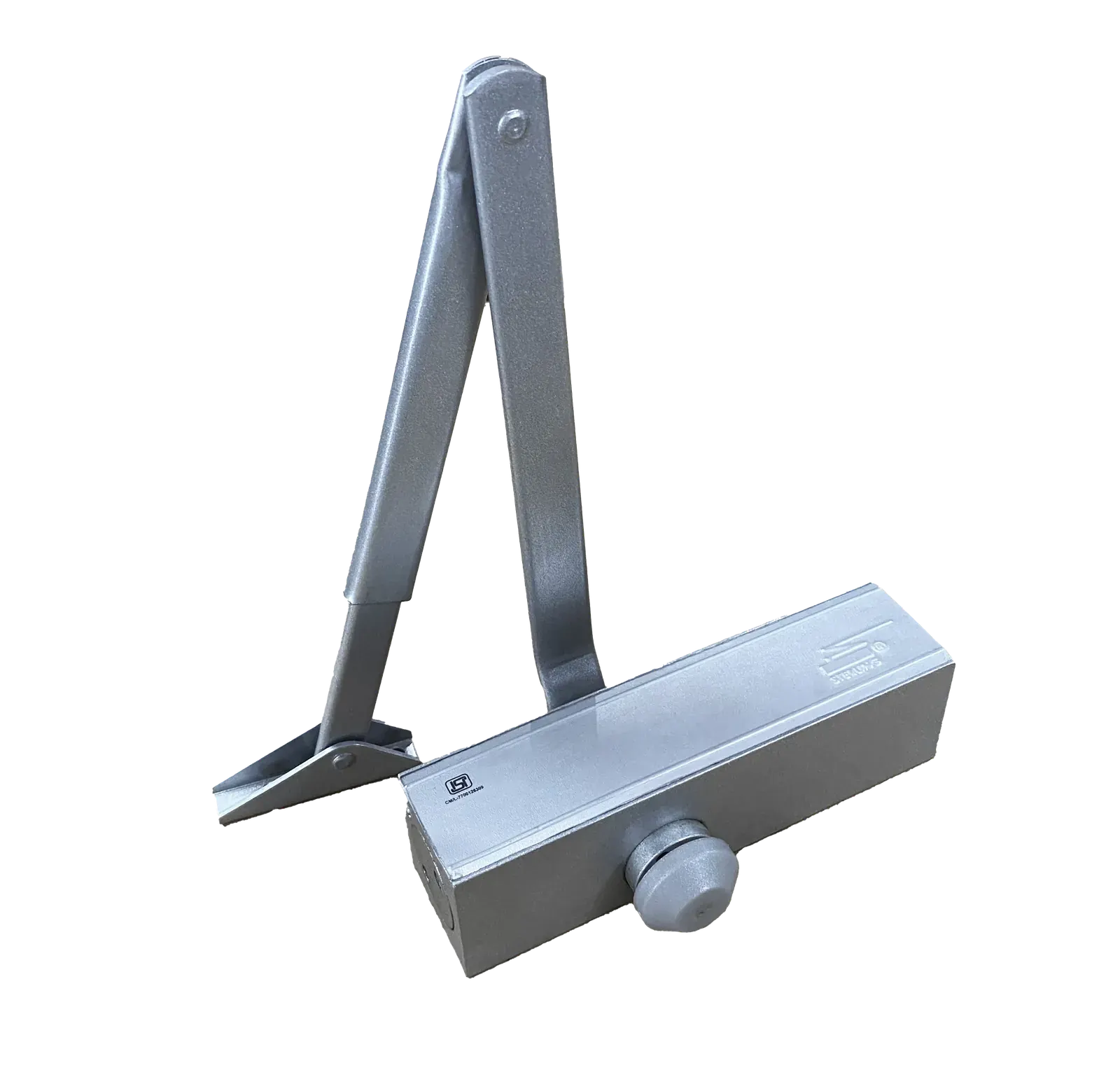
Under the scheme, the ISI mark is used with the number of the Indian Standard and the CM/L number of the licence, on the product or its packaging. On a door closer certified to IS 3564, the IS number may be on the body, a label, the box or the documentation; the CM/L number is what the check needs. On a Sterling DC 1800 LA, the mark and CM/L 7700126309 are printed on the closer body. A mark with no CM/L number gives you nothing to verify, and that is the first warning sign.
Write the number down exactly as printed. The check compares three copies: product label, supplier's quote or datasheet, and BIS record.
Where to check
BIS publishes its licence records on the Bureau of Indian Standards website, where licence details can be searched, and its BIS Care app has a licence verification feature that takes the CM/L number. Menus change, so this guide does not describe the clicks.
The record shows the licensee's name, the manufacturing premises, the Indian Standard, the scope, and the validity and status. If you cannot find the number, do not conclude anything yet; a digit may be mistyped on the label or the quote. Ask the supplier for a copy of the licence and search again with the number on that copy. If it still does not appear and the supplier cannot explain why, treat the product as uncertified for your tender.
Five things to compare
- The number itself. Product label, supplier paperwork and BIS record should all carry the same CM/L number. A quote citing a different number from the sample unit needs an explanation first.
- The licensee. The record names a manufacturer and a premises. A dealer quoting a CM/L number is quoting the manufacturer's licence, which is normal, but the name on the record should be the maker, not the dealer. Sterling is the brand; the maker is MM Efficient Gadget LLP, earlier known as Sterling Inflowtech Private Limited and Efficient Gadget Limited. If you do not recognise the name on a record, ask for the relationship in writing.
- The Indian Standard. For hydraulically regulated door closers the standard is IS 3564, and the Sterling door closers on the licence are marked to the 1995 revision. A licence against some other standard does not certify a door closer, however reputable the licensee. Sterling floor springs are certified under a separate licence whose standard this site does not publish; read it from the licence copy rather than assuming.
- The scope. The record lists what the licence covers, and a model outside that scope is not certified even though its maker holds a licence. Ask which models are within scope and check the answer against the record and the label. Sterling's coverage per model is below.
- Validity and status. Confirm the licence is current on the day you check. On a project that runs for months, check again before accepting delivery; a licence valid at tender can lapse before the goods arrive.
A valid licence of the right scope means BIS has licensed that factory to mark that product, with the inspections and sample testing the scheme requires. It does not test the unit in your hand, and it says nothing about whether the closer is the right power size for your door; that is covered in the guide to EN power sizes.
The two Sterling licence numbers
Sterling products are certified under two BIS licences: CM/L 7700126309 for all eight door closer models and CM/L 7700249814 for both floor springs. Each product page shows the licence that covers that model, and the certifications page lists the models under each licence, with a link to request a copy.
Scroll the table sideways for every column.
| Licence | Product type | Standard | Models covered |
|---|---|---|---|
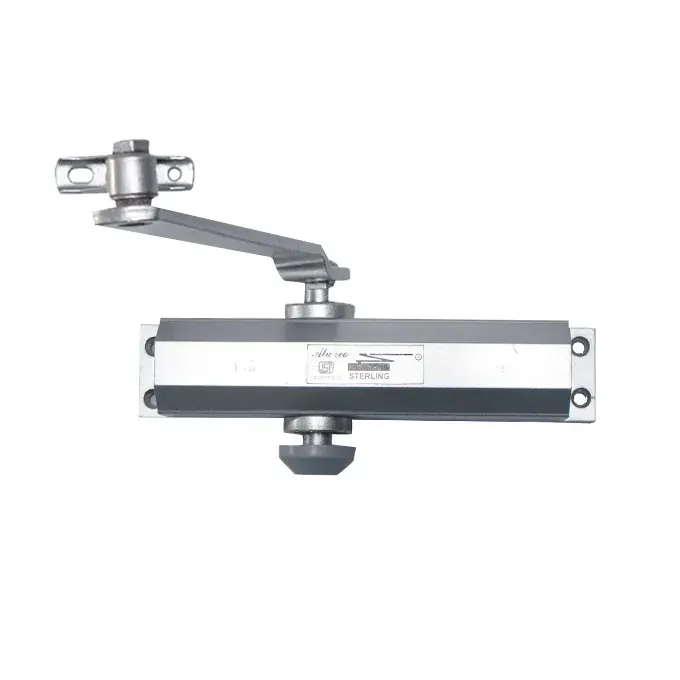
| CM/L 7700126309 | Door closers, ISI marked | IS 3564:1995 | DC 1500, DC 1800 LA, DC 1820, DC 2000, DC 2600, DC 2700, DC 2800, DC 2900 |
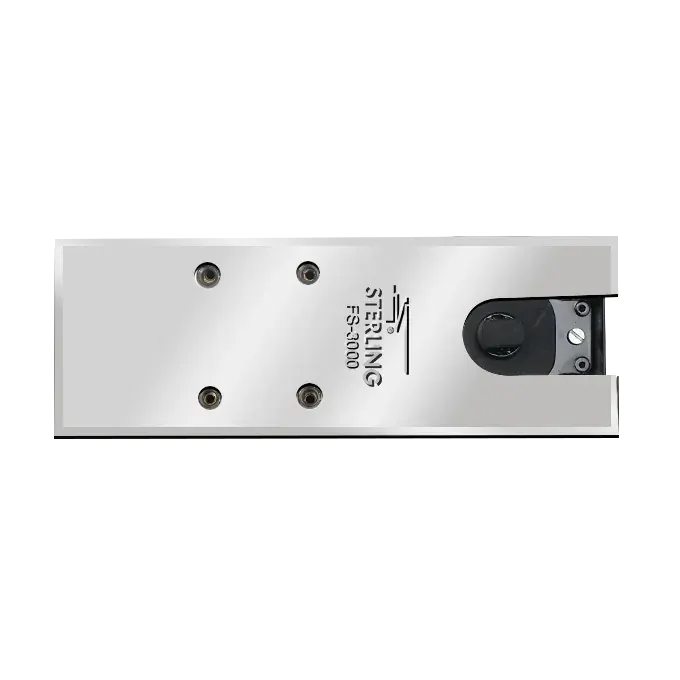
| CM/L 7700249814 | Floor springs, BIS certified | Not published on this site; stated on the licence | FS 1000, FS 3000 |
The licence covers the whole door closer range, including the concealed DC 2700 and DC 2800 and the DC 2900, the EN 4-5 model for doors up to 100 kg. A tender that requires ISI marked door closers can be met from any of the eight models listed, which cover doors up to 100 kg and 1100 mm wide. For floor springs, check the standard and scope on the CM/L 7700249814 licence copy against the tender wording. The DC 2000 is a lever arm model from that group, rated EN 3-4 for doors up to 80 kg, 1100 mm wide and 2100 mm high; the FS 3000 is the floor spring rated for 90 to 120 kg doors.
CE marking is a separate matter. Five Sterling door closers are CE marked: DC 1800 LA, DC 1820, DC 2000, DC 2600 and DC 2900. CE is a European conformity marking, has no entry in the BIS records and cannot be checked there.
When something does not match
Treat a mismatch as a question, not a verdict. The common causes are a mistyped digit, a datasheet that predates a renewal, or a dealer quoting a licence for a model outside its scope. Ask the supplier, in writing, for a copy of the licence, its current status and the models within its scope. A manufacturer that holds the licence can produce all three; if the supplier cannot, the product is, for your purposes, uncertified, whatever the label says.
Keep a record of the check: the date, the number searched, the licensee and standard shown, and the validity date. It goes in the submittal file with the licence copy; an auditor or a client's consultant may ask to see it. If the specification was written with the fields in the guide to writing a door closer specification clause, the check is simply confirming each line against the record.
Published ratings and markings for each model are on the Sterling door closer range and floor spring range pages.
Questions
Is a CM/L number the same thing as an ISI mark?
No. The ISI mark is the Standard Mark itself, the graphic. The CM/L number is the licence under which a manufacturer may use it on a given product.
Can one CM/L number cover both door closers and floor springs?
A licence is issued against one Indian Standard, so a single number offered for two different product types is worth querying. Sterling products carry two: CM/L 7700126309 for all eight door closer models to IS 3564:1995 and CM/L 7700249814 for floor springs.
The manufacturer has a licence. Does that certify every model it makes?
No. The licence covers the varieties listed in its scope. All eight Sterling door closers are ISI marked under CM/L 7700126309, while the floor springs sit on a separate licence and are not marked to IS 3564, so check the model against the scope, not just the company against the licence.
Is BIS certification compulsory for door closers?
Whether certification is compulsory for a product is set by Quality Control Orders issued by the Government of India; BIS publishes the current list. For a tender, ask the specifying authority what it requires. Where certification is voluntary, an ISI mark is still a third-party conformity claim backed by a checkable licence, so the number is worth checking either way.