
TROUBLESHOOTING & MAINTENANCE
Door closer problems: slamming, not latching, drifting and leaks
Most reported closer faults are one of five symptoms. Only one of them genuinely needs a new unit.
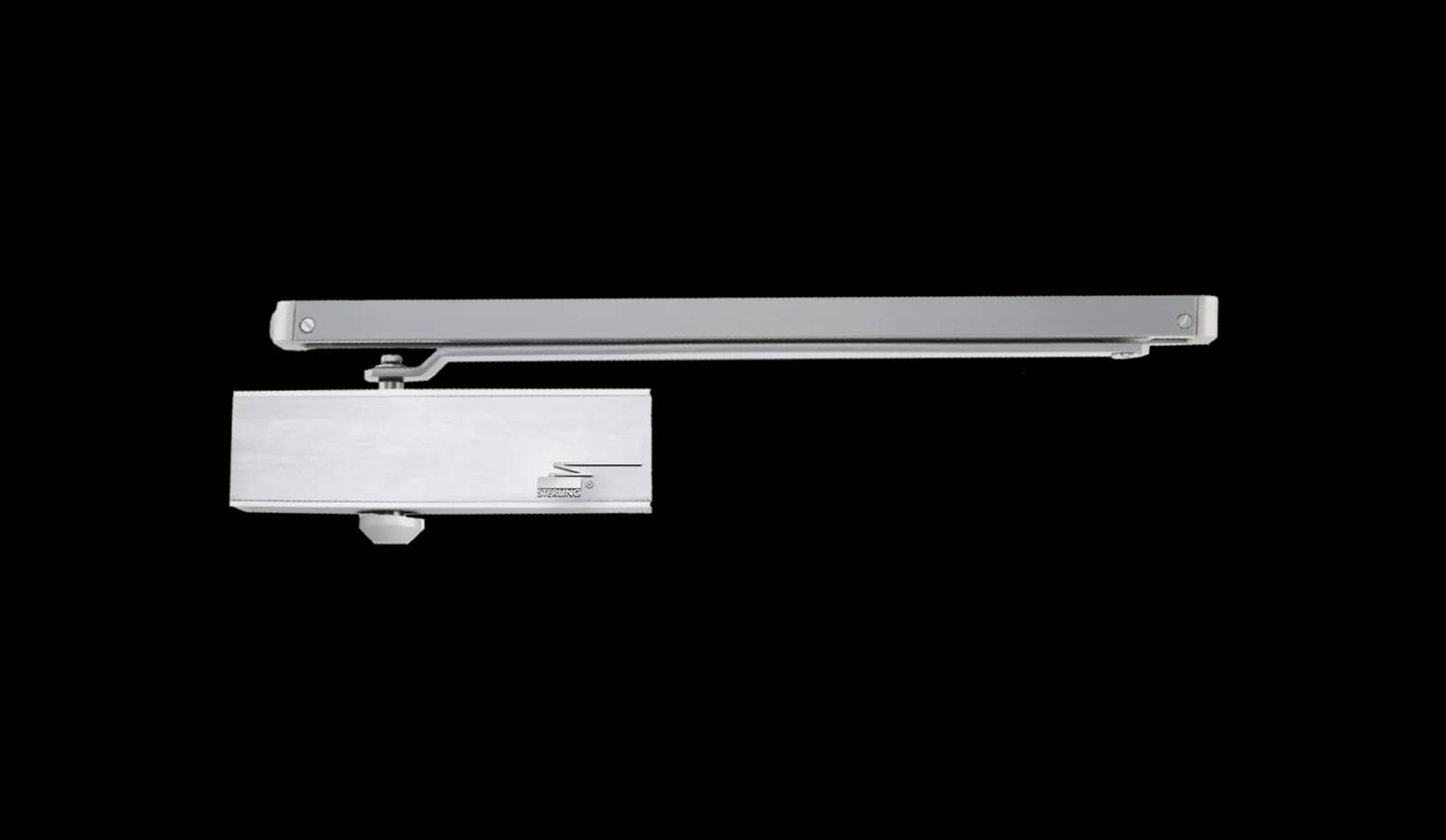
Door closer complaints arrive in a small number of recognisable forms. Working out which one you have narrows the cause quickly, and in most cases the fix is a screwdriver rather than a purchase order.
The door slams
Almost always the closing speed valve is open too far, letting oil move through the closer faster than it should on the main sweep. Tighten it in eighth turns until the sweep is controlled.
If slowing the sweep does not stop the bang, the noise is coming from the last few degrees instead, and it is the latching speed that is set too fast. The two are easy to confuse by ear, so watch the door rather than listen to it, and note where in the swing it accelerates.
The door does not latch
The opposite adjustment. The latch speed is throttled too far, so the door arrives at the frame without enough momentum to drive the bolt home, or the closing force is set too low to compress a seal.
Check it from a partly open position, around 15 degrees, not from wide open, because a door can carry enough momentum from a full swing to latch while still failing in normal use. If opening the latch valve does not fix it, look at whether the closer is powerful enough for the door at all: an external door fighting wind or stack pressure frequently needs a higher power size than its dimensions alone suggest.
The door stops part-way and drifts
A door that closes most of the way and then stalls is losing energy to friction somewhere. Hinges are the first thing to check, since a dropped or binding hinge drags through part of the arc. A frame that is out of square does the same, as does a leaf that has swollen against the stop.
Where the door has been rehung, or a floor covering has been laid since the closer was fitted, check the clearance at the bottom of the leaf before adjusting anything hydraulic.
The closer leaks oil
This one is terminal. A hydraulic closer is a sealed pressurised unit, and visible oil means a seal or the body has failed. It cannot be topped up or resealed in the field, and a unit that has lost fluid will lose its damping entirely. The door goes from controlled to free-swinging, which on a heavy leaf is a safety problem rather than an inconvenience.
The common self-inflicted cause is someone unscrewing a speed adjustment valve past the end of its travel while trying to speed the door up. The valves are seals; they are not meant to come out.
The door is too hard to open
The closing force is set higher than the door needs. On a closer with an adjustable lever arm the force is set by the arm's position or preload, within the model's EN band, so it can be brought down without changing the unit.
Worth treating as a real fault rather than a preference. A door set heavy is a door that children, elderly users and wheelchair users struggle with, and the correct setting is the lowest one that still latches the door reliably every time, not the highest the model allows.
Keeping them working
Door closers need very little, but a short annual check per door catches most of what goes wrong: look for oil around the body, confirm the door still latches from a small opening, confirm the opening force still feels reasonable, and check the arm fixings are tight. Loose fixings are worth catching early, because a closer working against a fastening that has started to move will enlarge its own fixing holes in the leaf.