Hold-open door closers: when to specify and where not to
Covers 10 to 90 degrees
On Sterling door closers hold-open is a separate order code. Which doors benefit from a hold-open closer or floor spring, which must self-close every time, and what to check before it goes in the schedule.
- Written by
- Sterling
- Published
- Updated
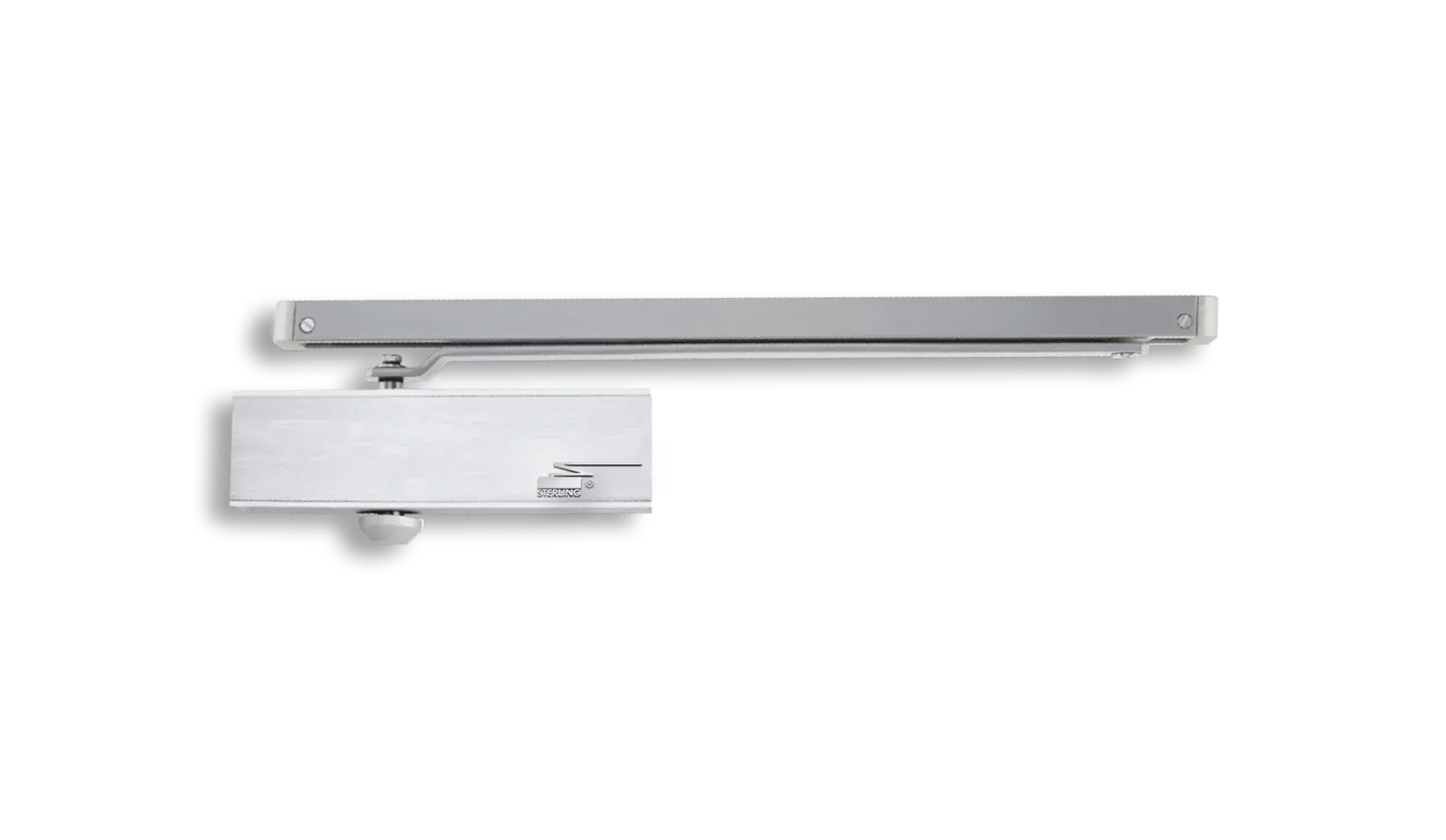
A hold-open door closer closes the door under control like any other closer, and on demand parks it open at an angle until someone moves it. That helps on some doors and defeats the purpose on others. On Sterling door closers hold-open is a separate order code, marked HPA for hold-open pelmet arm, and both floor springs have it built in, so put it in the schedule before ordering. This guide covers which doors get one, which must self-close, and which must not be held open at all. For every model's limits in one table, see the model by model guide to the Sterling range.
How a mechanical hold-open works
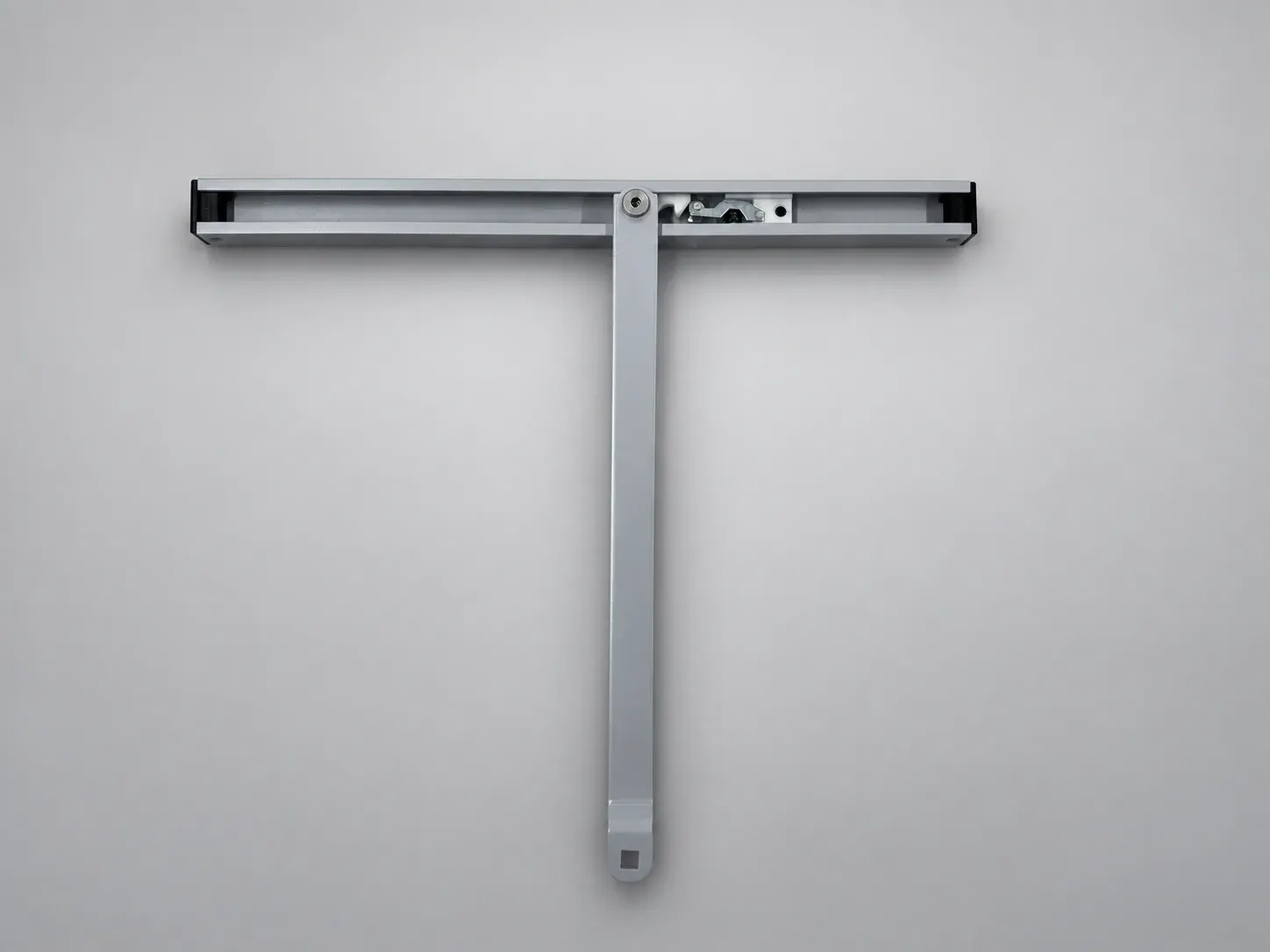
A hydraulic door closer stores energy in a spring as the door opens and meters it back out through oil valves as the door closes. A mechanical hold-open adds a catch, in the arm or the body, that holds the spring's load at a set angle so the door stays put. Push the door a little further, or pull it towards closed, and the catch releases and the closer takes over. Nothing is powered and nothing has to be reset.
Hold-open is not back check (hydraulic resistance near full opening) or delayed action (a slow start to the closing swing). Neither is listed in the Sterling product data, so do not write either into a clause against a Sterling model. If a door needs back check, ask Sterling before ordering.
Doors that should be held open
The test is whether there is a regular period when the door needs to stand open and nobody will be there to hold it. If there is, a hold-open closer is a better answer than a wedge, which marks the leaf and strains the closer.
- Service and delivery routes. Back-of-house corridors, store rooms and commercial kitchens, where trolleys pass in batches.
- Rooms that need airing. Domestic kitchens, utility rooms and workshops. The guide to door closers for homes in India covers the kitchen and balcony case.
- Doors used in bursts. Classrooms, meeting rooms and waiting rooms, open while people file in and closed for the session.
- Glass entrance doors on floor springs. A showroom or office entrance that stands open in trading hours, where the fire strategy permits it. See the guide to frameless glass door hardware for the floor spring set-up.
Doors that should not be held open
A closer is fitted because a door has to be shut when nobody is thinking about it. Here a hold-open works against that.
- Fire and smoke doors. Covered in the next section; this one is regulation, not judgement.
- Security doors. A flat's main door, a staff-only door or a cash office, where the closer puts the door on its latch behind every user.
- Doors to conditioned space. Air-conditioned offices and cold rooms, where the energy cost runs while the door stands open.
- Doors with seals. Smoke, draught and acoustic seals only work with the door closed and latched.
- External doors exposed to wind. A mechanical hold-open holds the door against the closer's spring, not against a gust, which can knock it off the hold and slam it. Even on the DC 2900, which is designed to withstand heavy wind pressure, question whether hold-open is wanted at all.
Fire doors: the rule to check first
A fire or smoke door only works when it is closed. Hold-open on fire doors is governed by fire regulations and usually needs a release device: a hold-open that lets go when the fire alarm operates or the power fails, so the closer shuts the door. Under EN 1154, the European standard for controlled door closing devices, a closer with a mechanical hold-open is not graded for fire or smoke door use; electrically released hold-open devices are covered by a separate standard, EN 1155. The EN 1154 classification guide explains the rest of that code.
On a schedule, mark every designated fire or smoke door and leave the hold-open decision on those doors with the fire consultant. The product data lists no electrically released hold-open for any Sterling model, so the hold-open models belong on doors with no fire or smoke separation role.
Choosing the angle, and checking the wall
A hold-open is only useful at an angle the door can reach. Check how far the door opens before it meets a wall, another door or furniture. A floor spring that holds at 90 degrees needs the door to reach a right angle; if a wall stops it at 80 degrees, the hold never engages and the door gets reported as faulty.
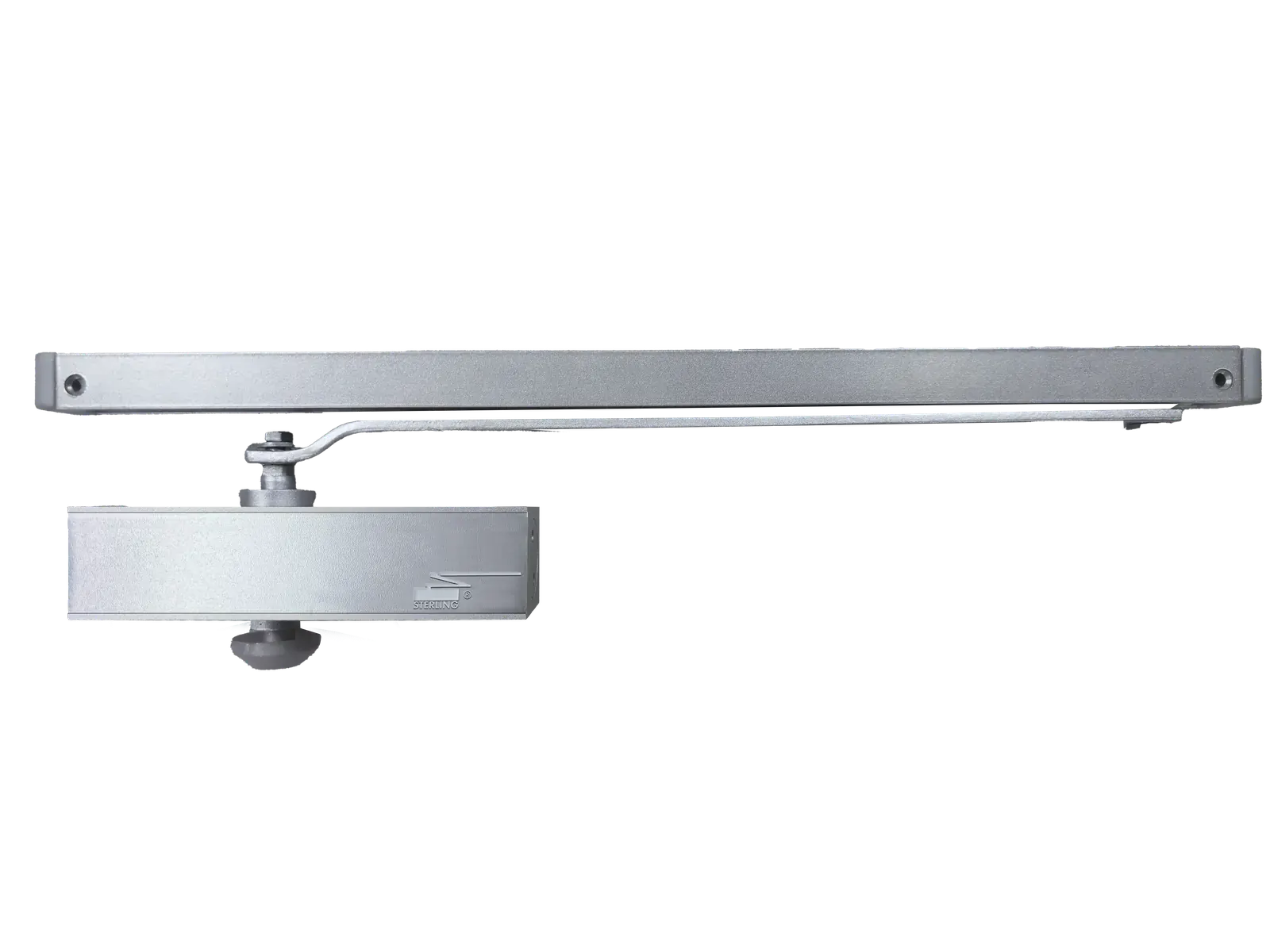
Where the door should stand only partly open, a range matters. The DC 2600 has an inbuilt hold-open from 10 to 90 degrees. The DC 1820 is a hold-open pelmet arm model and its product data prints no degree range, so if the angle matters, ask Sterling to confirm it before ordering rather than assuming a figure.
A door parked on its hold looks, to anyone who does not know, like a broken closer. Say in the handover notes that pulling the door off the hold releases it.
Sterling models with hold-open
Hold-open is published per model, and the table lists only what each product page states. The closers are on the Sterling door closers page and the floor springs on the Sterling floor springs page.
Scroll the table sideways for every column.
| Model | Type | Door limits | Hold-open | Marking and cycle test |
|---|---|---|---|---|
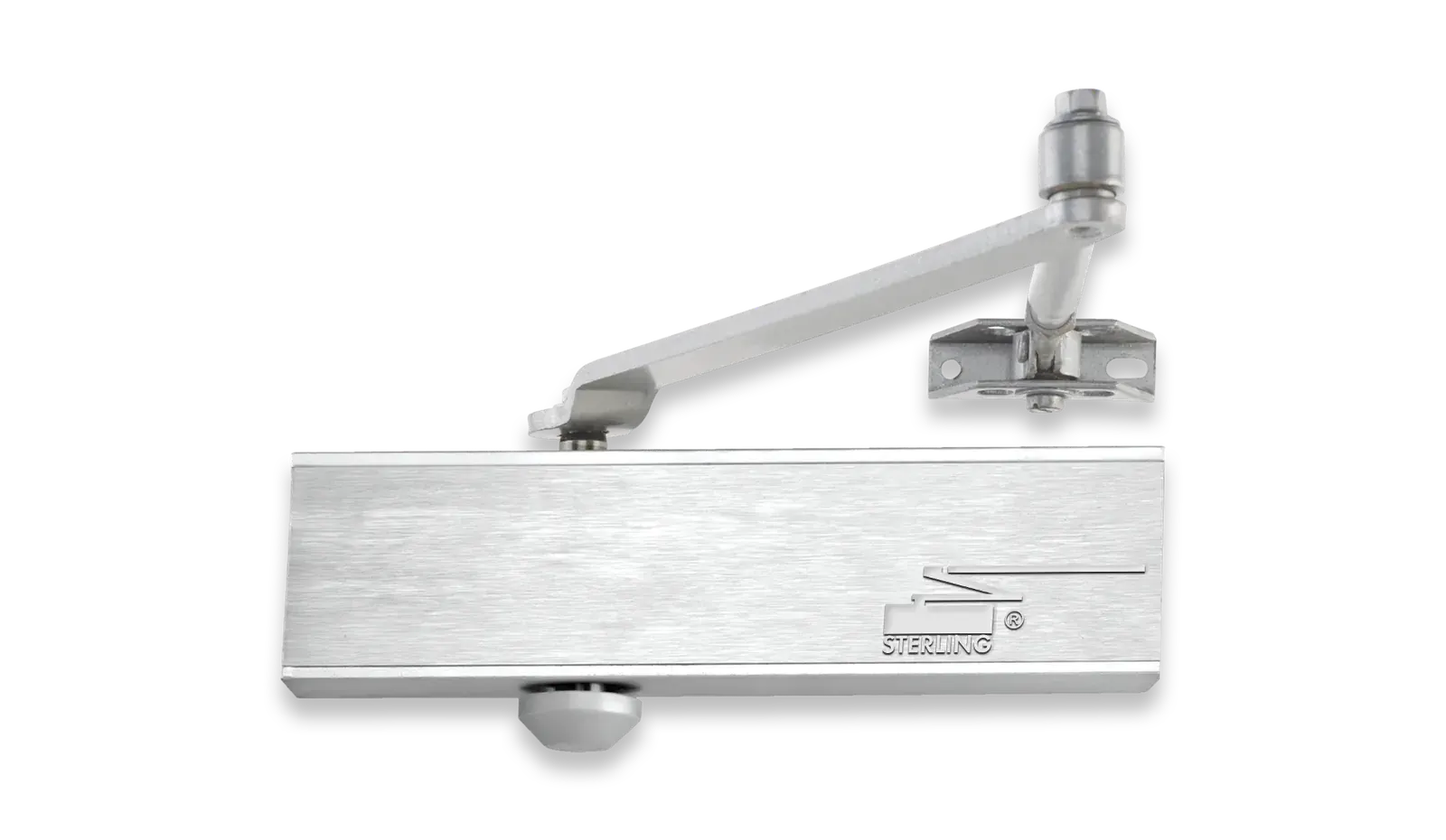
| DC 2600 | Surface, hold-open pelmet arm | Up to 80 kg, 1100 mm wide, 2100 mm high, EN 3-4 | Inbuilt, 10 to 90 degrees | ISI (IS 3564:1995, CM/L 7700126309), CE, 5,00,000 cycles |
| DC 1820 | Surface, hold-open pelmet arm | Up to 60 kg, 950 mm wide, EN 2-3 | Yes, no range printed | ISI (IS 3564:1995, CM/L 7700126309), CE, 4,00,000 cycles |
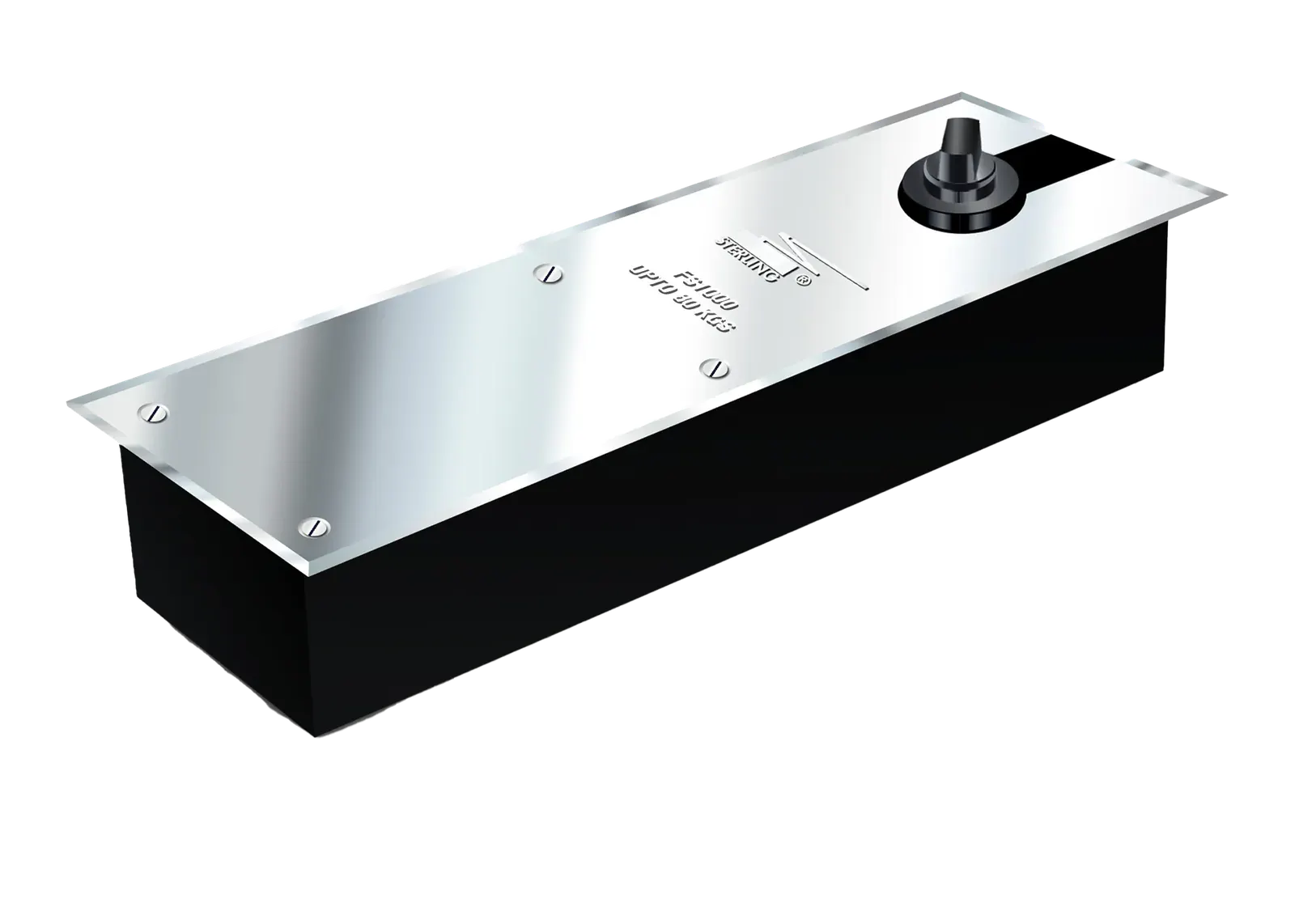
| FS 1000 | Floor spring | 60 to 80 kg, 1100 mm wide, 2100 mm high | Built in at 90 degrees | BIS certified, CM/L 7700249814, 5,00,000 cycles |
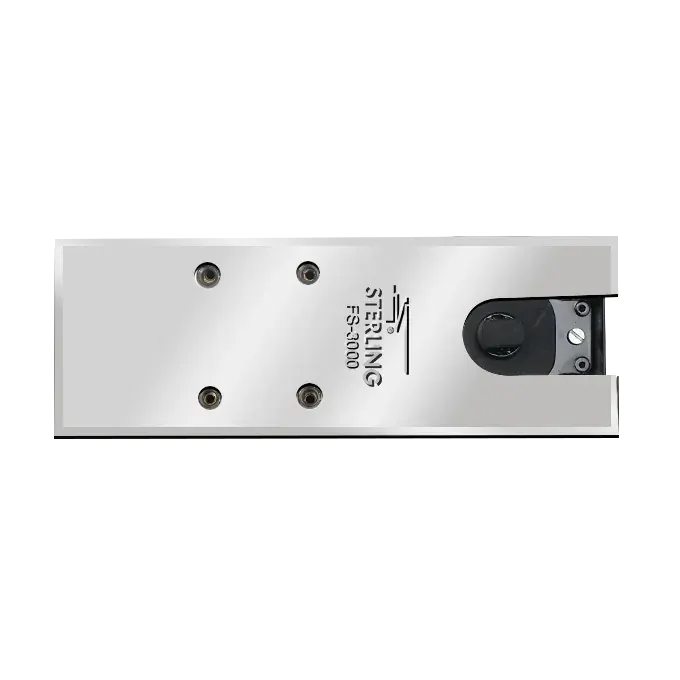
| FS 3000 | Floor spring | 90 to 120 kg, 1100 mm wide, 2100 mm high | Built in at 90 degrees | BIS certified, CM/L 7700249814, 5,00,000 cycles |
Where a door on the same project needs no hold-open, the DC 2000 takes the same doors with a lever arm; the range guide compares the DC 2000 and DC 2600.
The FS 1000 and FS 3000 both have double action to prevent door and wall damage, and the FS 3000 has a load adjustment screw across 90 to 120 kg. The product data does not say whether the floor spring hold can be disabled, so if a glass door must never stand open, raise it at enquiry. The floor spring adjustment guide covers how the 90 degree hold behaves in use.
Hold-open versions of other models are listed by order code: the DC-1520 HPA for the DC 1500, the DC-2920 HPA HD for the DC 2900, and for the concealed closers the DC-2720 HPA for the DC 2700 and the DC-2820 HPA for the DC 2800, both holding from 10 to 90 degrees. Every Sterling door closer, including the DC 1500, DC 2700, DC 2800 and DC 2900, is ISI marked to IS 3564:1995 under BIS licence CM/L 7700126309; CE marking is per model, stated for the DC 2600, DC 1820 and DC 2900 and not for the DC 1500, DC 2700 or DC 2800. Where a clause asks for hold-open and CE marking on the same door, choose the DC 2600, the DC 1820 or the DC-2920 HPA HD version of the DC 2900, and confirm the CE mark on the DC-2920 HPA HD with Sterling.
Putting it in the door schedule
Mark hold-open in the schedule from the first enquiry, since on a door closer it changes the order code. For each door that needs it, record the angle the room allows and whether the door has any fire or smoke role. For every other door, write "no hold-open" rather than leaving the column blank, so a hold-open unit never reaches a door that must self-close. The door schedule guide shows the full set of columns.
Questions
What is a hold-open door closer?
A door closer that can also hold the door open at a set angle until someone moves it, then closes it normally. On Sterling door closers it is a separate order code, marked HPA.
Who decides whether a fire door can be held open?
The project's fire consultant, under the fire regulations for the building, not the door hardware supplier. Mark each fire or smoke door in the schedule and leave hold-open off it until they have decided.
Can hold-open be added to a closer that is already fitted?
On Sterling door closers hold-open comes with its own order code (HPA), and the product data does not describe converting a closer already on the door. Ask Sterling before planning a retrofit.
Does a floor spring hold the door open?
Both Sterling floor springs, the FS 1000 and FS 3000, hold at 90 degrees. The door has to reach a right angle for it to engage, so check the wall clearance first.