Door closers for homes in India: main door or internal door
Covers DC 1500 to DC 2900
A main door and a bedroom door ask different things of a closer: the main door is often heavier and wider, while a bedroom door is lighter, used all day and pushed by children and older parents. Size each for what it is.
- Written by
- Sterling
- Published
- Updated
A home has a different door closer problem from an office. The main door is often heavier and wider than the doors inside: solid timber or a laminate on a solid core, with a mortise lock whose latch the closer has to drive home, often facing a windy corridor or verandah. The internal doors are the opposite: narrower, often flush doors with a hollow or block board core, opened many times a day by children and elderly parents, and wanting only as much force as it takes to latch. One size for the whole flat gives either a main door that does not latch or internal doors that fight their users. This guide is for a homeowner, interior contractor or carpenter in India choosing between the two.
Which doors in a home need a closer
A closer earns its place where a door left open causes a problem and nobody is reliably there to shut it: the main door, for security; air-conditioned rooms, so cooled air stays in; the kitchen, to keep smoke in and toddlers and pets out; and balcony or utility doors, against wind, dust and mosquitoes. Bathrooms, wardrobes and store rooms are shut by hand when used.
Size each door by its width and its weight
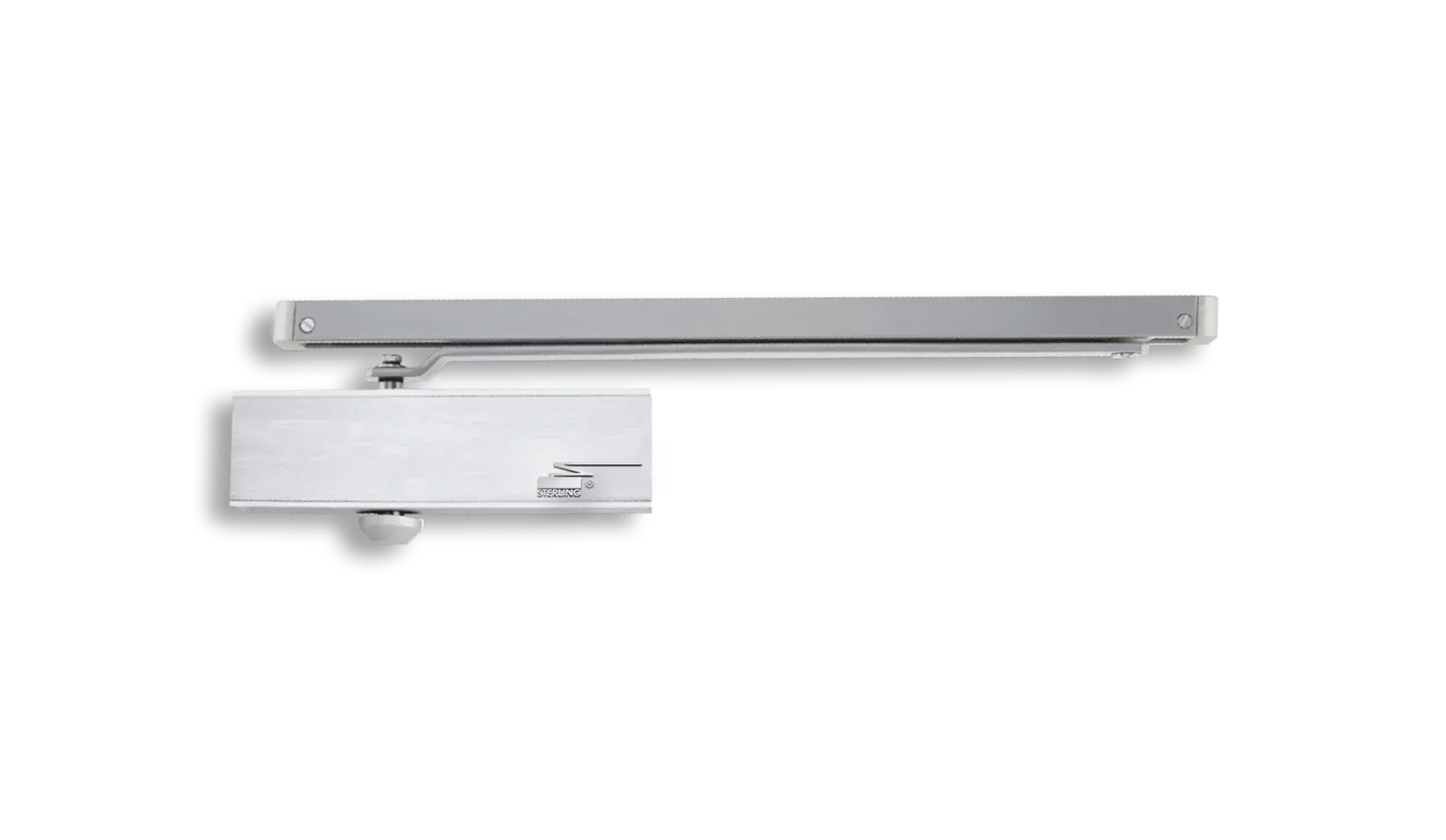
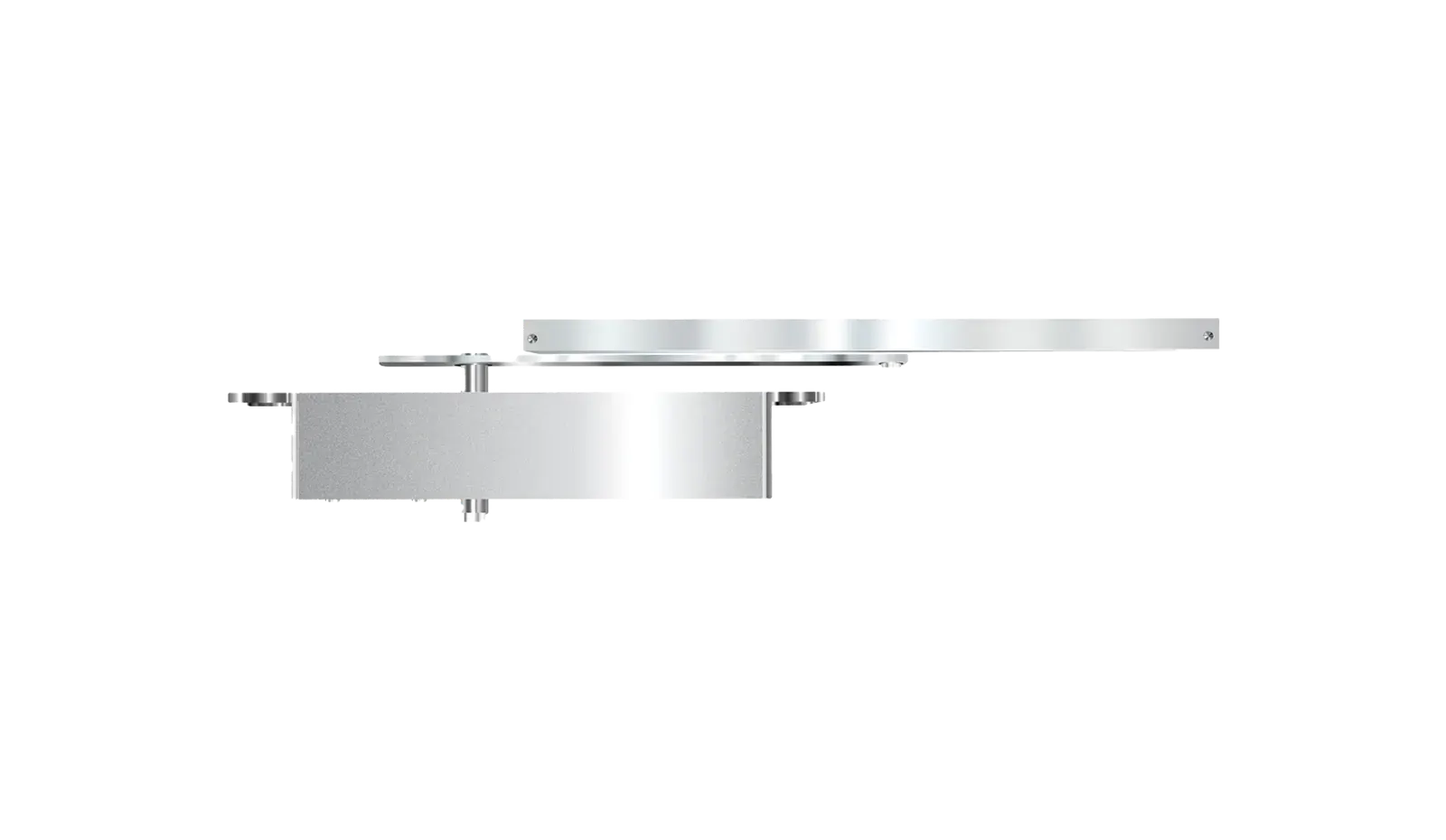
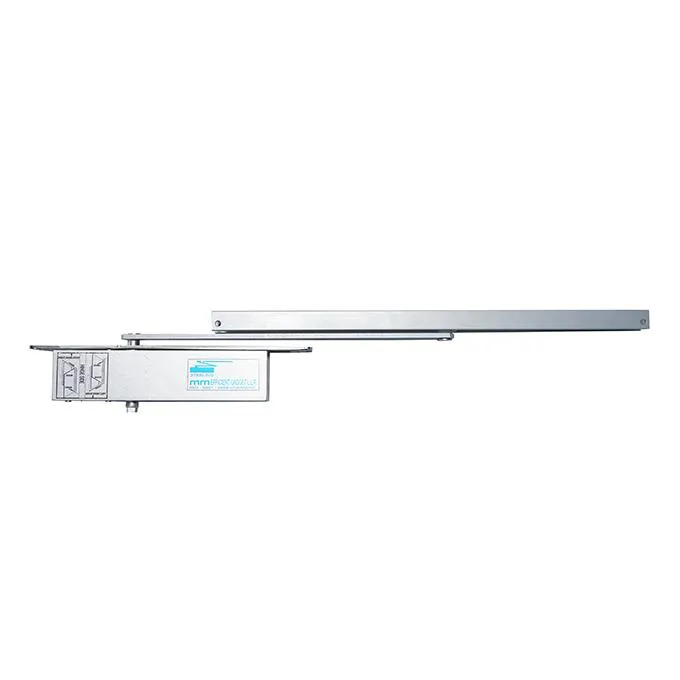
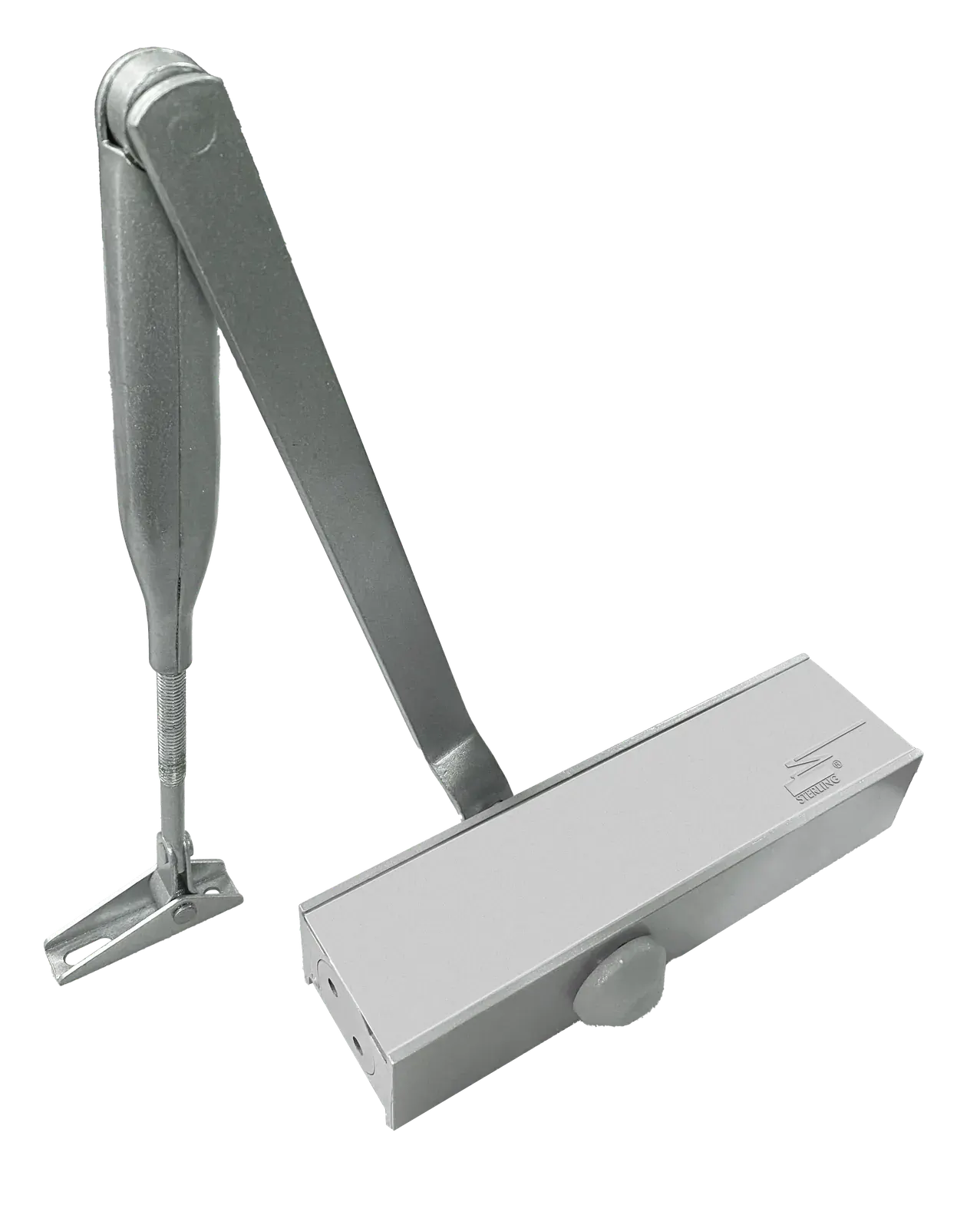
Door closers are sized against leaf width and leaf mass on the EN 1154 power size scale, and the door has to sit under both limits of a size. The guide to EN power sizes and what size door closer you need sets out the scale, and the guide on how to measure a door before choosing a closer covers taking the figures. Three Sterling surface-mounted models cover most doors in a home:
Scroll the table sideways for every column.
| Model | EN band | Door weight | Door width | Body (mm) | Marking | Cycle test |
|---|---|---|---|---|---|---|
| DC 1500 | EN 1-2 | Up to 45 kg | Up to 900 mm | L190 x W39 x H40 | ISI | Not published |
| DC 1800 LA | EN 2-3 | Up to 60 kg | Up to 950 mm | L162 x W40 x H45 | ISI and CE | 4,00,000 cycles |
| DC 2000 | EN 3-4 | Up to 80 kg | Up to 1100 mm | L202 x W40 x H55 | ISI and CE | 5,00,000 cycles |
All three have extruded aluminium housings, rack and pinion mechanisms with two-speed control and universal mounting for left and right hand doors, and suit wooden and aluminium doors. Every Sterling door closer is ISI marked to IS 3564:1995 under BIS licence CM/L 7700126309; CE marking is per model, and the DC 1800 LA, DC 1820, DC 2000, DC 2600 and DC 2900 are also CE marked.
Weight is usually guessed, and guessed low: a hollow-core flush door and a solid teak door of the same size can differ by a factor of three. Weigh the leaf if it is not yet hung; otherwise ask the door supplier, or size from the construction and err upwards, since a closer's force can be turned down within its band but not up past it.
The main door
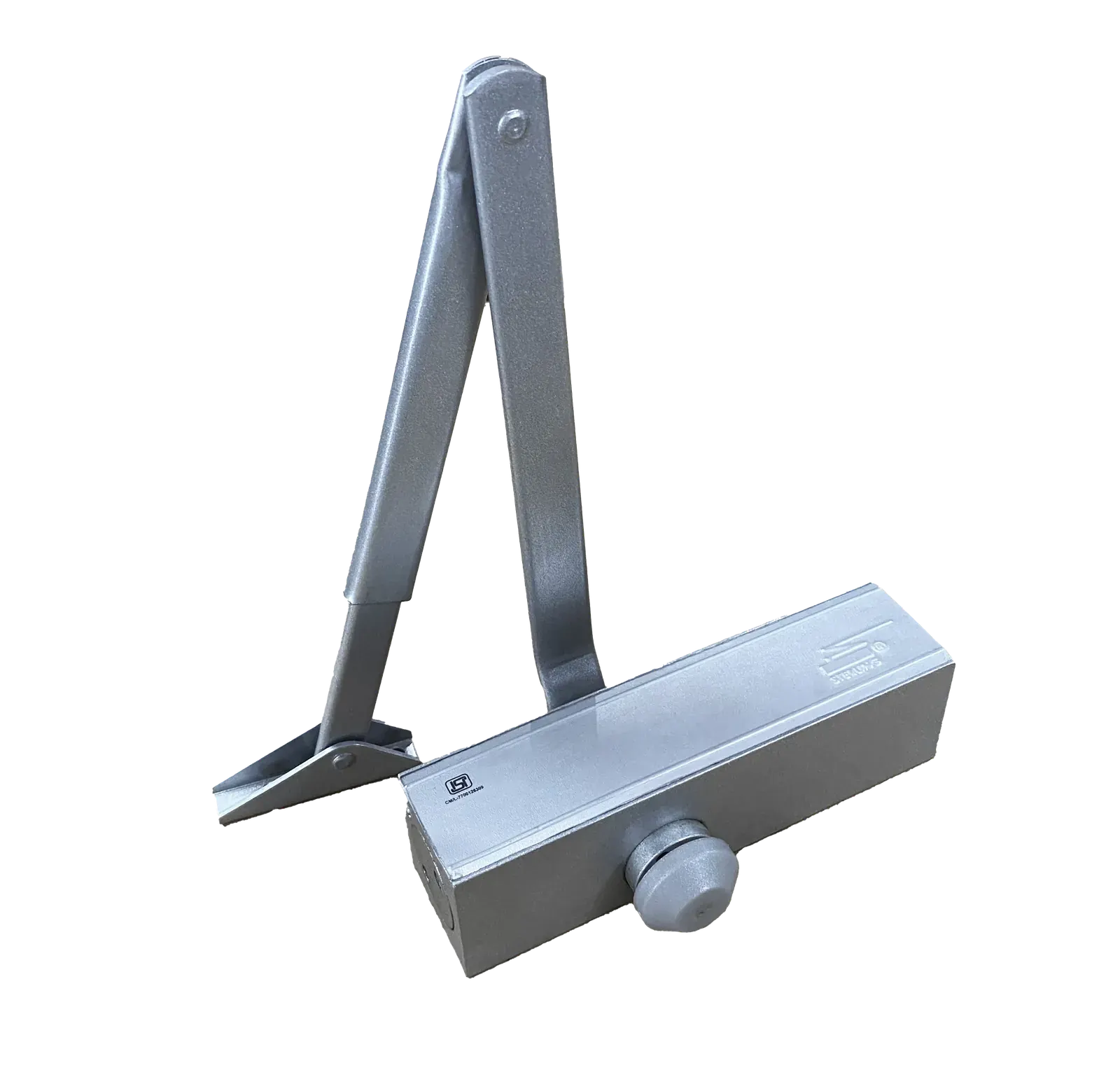
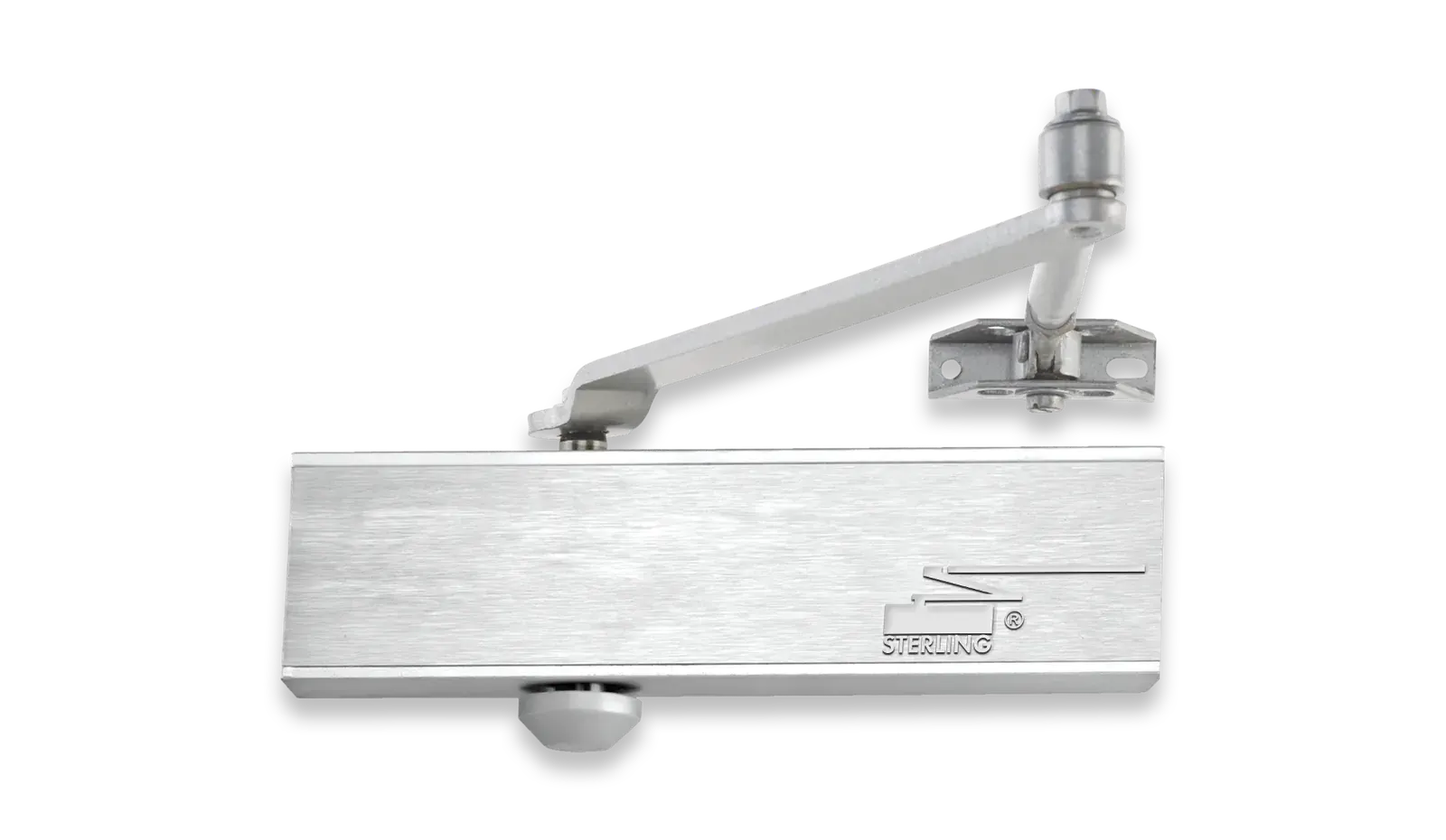
For most main doors the arithmetic lands on the DC 2000: EN 3-4, doors up to 80 kg, 1100 mm wide and 2100 mm high. Its lever arm adjusts the closing force, and speed is adjusted from the front face of the body. If the leaf is heavier than 80 kg, the DC 2900 covers EN 4-5 up to 100 kg and is designed to withstand heavy wind pressure. Three things to settle at the door first:
- Which way it opens. A main door normally opens into the flat, so the closer body usually goes on the inside face of the leaf, out of the weather. These models also mount on the frame, but that usually puts the body on the push side, which here is the corridor side; check the model's installation guide first.
- The lock. The closer has to carry the leaf onto the latch bolt against the latch spring and any seal; set the latching speed for that, as in the guide on adjusting a door closer's closing and latching speed. A magnetic catch or a floor-mounted door holder will fight the closer and should come off.
- The safety door. Many flats also have an outward-opening steel grill door. Sterling's product data states wooden and aluminium doors for the surface-mounted range, not steel, so send the grill door's weight, width and section details with the enquiry.
Internal doors
Start with the construction of the leaf, because it decides both the model and the fixing. A hollow-core flush door needs solid material behind the closer before it is fitted; the guide to door closer installation mistakes explains why. A block board or solid-core door takes the fixings directly.
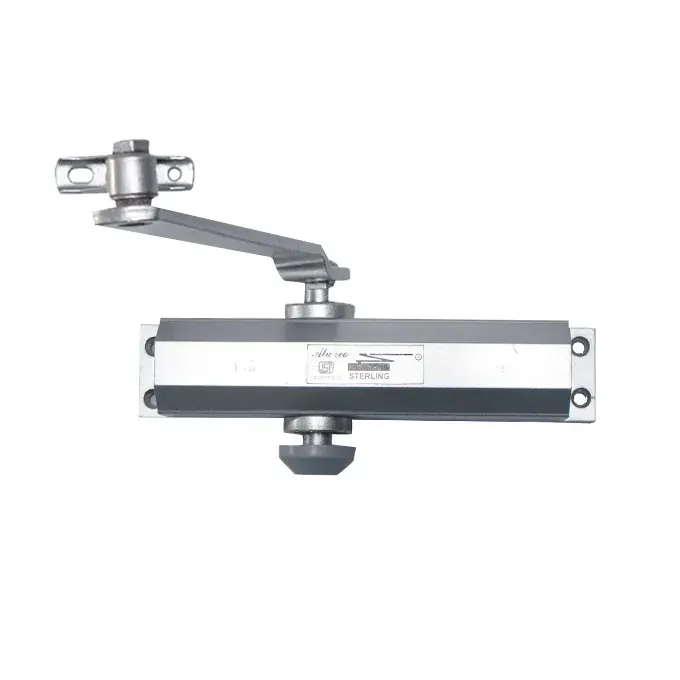
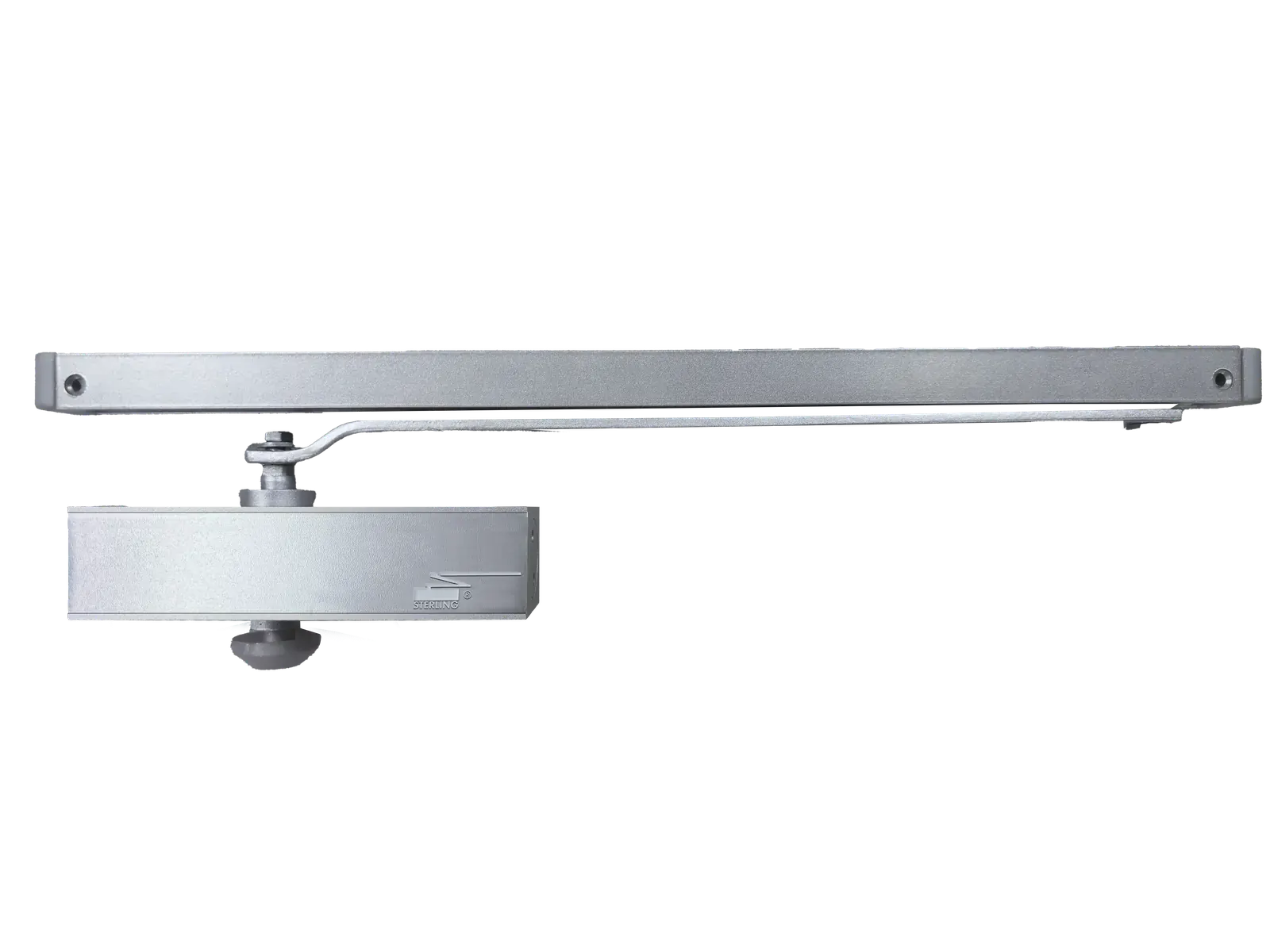
Sterling rates the DC 1500 (EN 1-2) for doors up to 45 kg and 900 mm. That is above the EN 2 limits of 40 kg and 850 mm, so for a leaf between those figures ask Sterling to confirm the fit or step up to the DC 1800 LA. It comes as a lever arm, a pelmet arm (DC-1510 PA) and a hold-open pelmet arm (DC-1520 HPA), and its reduced mounting hole distance suits the narrow section of an aluminium balcony door; the guide to door closers for aluminium doors covers fixing into those sections. For a solid-core bedroom or kitchen door up to 60 kg and 950 mm, the DC 1800 LA at EN 2-3 covers it, and is also available with front control speed adjustment.
Whichever model, adjust it the day it is fitted: a child or an older parent should open the door without strain, and it should still latch every time. If a child finds the door hard to open, the force is set too high or the model is a size too large.
Hold-open for kitchens and balconies
A kitchen or balcony door often needs to stay open, and wedging it against a closer loads the mechanism continuously. The DC 1820 is a hold-open pelmet arm model for doors up to 60 kg and 950 mm at EN 2-3, and the DC-1520 HPA is the DC 1500's hold-open pelmet arm variant for a lighter door; no hold-open angle is published for either, so ask if the angle matters. The DC 2600 covers EN 3-4 up to 80 kg and 1100 mm with an inbuilt hold-open from 10 to 90 degrees. Where the society or builder has designated the flat entrance a fire door, ask before fitting hold-open to it; the building's fire requirements govern, as the guide on when to specify a hold-open door closer explains.
Finish and appearance
The DC 1500, DC 1800 LA and DC 2000 are PU painted and, like every Sterling door closer, offered in silver, black, brown, gold and rose gold; the brochure prints order codes for silver (ending PU SR) and black (PU BLK), as in DC-2000-LA-PU SR. Black suits a dark wood main door or black lever handles; silver suits light timber and aluminium sections. Where nothing may show above the door, the concealed DC 2700 (wooden doors from 32 mm thick, up to 60 kg) and DC 2800 (from 38 mm, up to 80 kg) fit inside the leaf, in the same five finishes. They are normally fitted in the workshop before the door is hung, since a retrofit means taking the leaf down and cutting into a finished edge; see installing a concealed door closer and surface-mounted versus concealed door closers.
Buying one
Sterling does not publish list prices, and the range is sold through a dealer network across India. For a direct enquiry, send per door: width, weight or at least construction, material, opening direction, whether hold-open is wanted, and finish. Warranty terms are not published on this site either, so ask for them in writing with the quotation. The full range is on the Sterling door closers page, and the contact page takes enquiries.
Questions
Which Sterling door closer suits a main door?
For a main door up to 80 kg and 1100 mm wide, the DC 2000 (EN 3-4) fits. It is ISI marked to IS 3564:1995, CE marked and tested for 5,00,000 cycles in a government-approved lab. Heavier leaves up to 100 kg go to the DC 2900 (EN 4-5), which is also ISI marked to IS 3564:1995, CE marked and tested for 5,00,000 cycles.
Which door closer is right for a bedroom or kitchen door?
A light flush door within EN 2 (40 kg, 850 mm) takes the DC 1500 (EN 1-2); between that and its rated 45 kg and 900 mm, ask Sterling to confirm the fit or use the DC 1800 LA. A solid-core door up to 60 kg and 950 mm takes the DC 1800 LA (EN 2-3). A kitchen door that stays open takes the hold-open DC 1820, or the DC-1520 HPA for a lighter door.
Can a door closer be fitted to a hollow flush door?
Only with a solid timber insert or a backing plate behind the body, because screws into the thin facing work loose.